
Last 20-24 August, I participated in Nantes at the 15th Pangborn Sensory Science Symposium "Meeting new challenges in a changing world", an international conference that brings together experts, researchers, and professionals from various disciplines to explore and discuss advancements in sensory science.
Sensory science plays a crucial role in understanding how humans perceive and respond to stimuli such as taste, smell, touch, sight, and sound. It encompasses a wide range of disciplines, including psychology, neuroscience, consumer behavior, food science, and marketing. By studying sensory perception, researchers can unravel the intricate connections between our senses, emotions, memories, and decision-making processes. The Pangborn Sensory Science Symposium covers a wide range of topics, including Novel sensory evaluation methods and techniques, Cross-cultural and global sensory research, Sensory marketing and consumer behavior, and Health, wellness, and sustainability. I had the opportunity to present a recent work of my research group which focuses on using means-end chains to explore consumers' motivation for buying plant-based meat alternatives among Italian consumers. Another poster presentation of the Univerisity of Parma was about consumers’ implicit attitude towards organic goods: a physiological study.
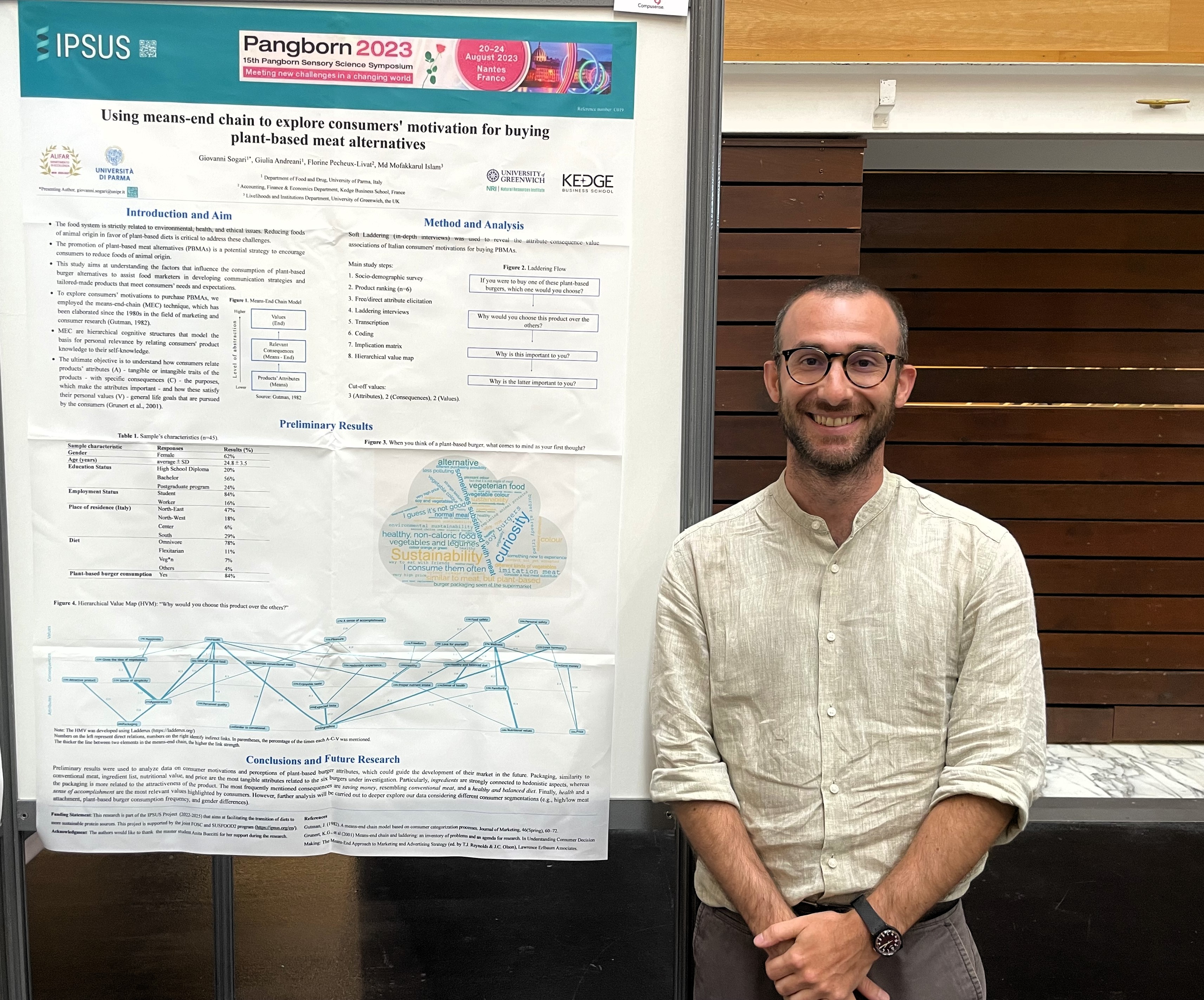
It was a great opportunity to discuss with experts about the role of sensory marketing in shaping consumer perceptions, emotions, and decision-making processes, offering insights that can help businesses develop effective sensory branding strategies. I also met old colleagues like Alina Stelikc from Cornell University.